
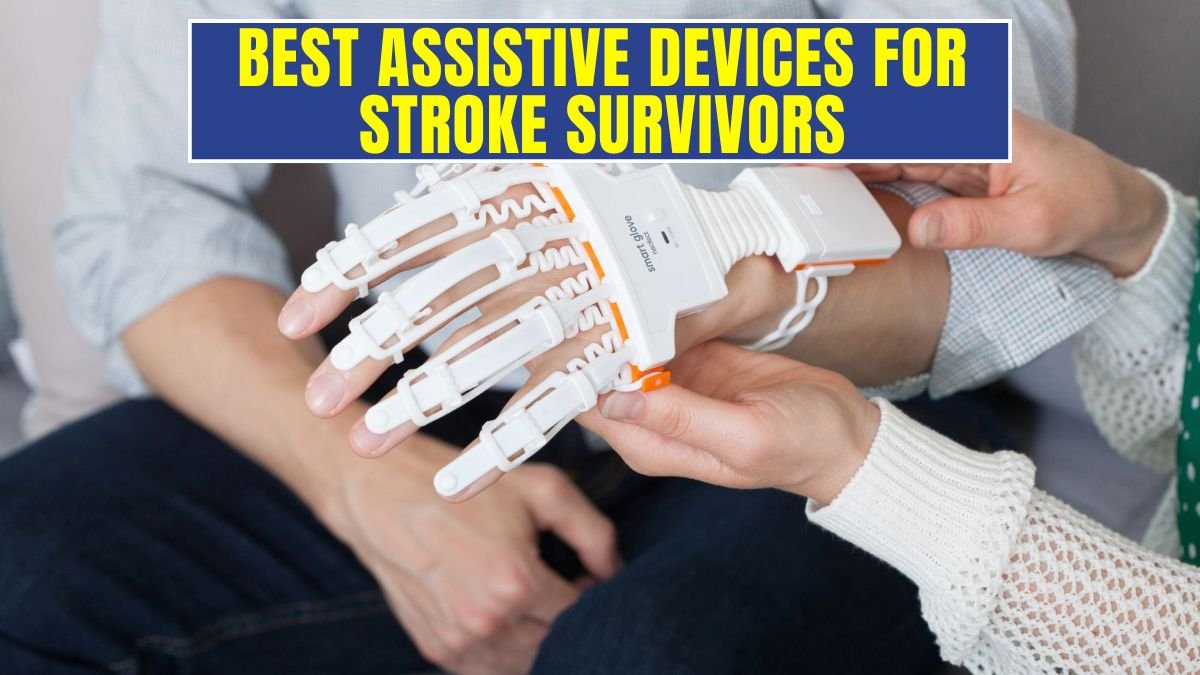
Best Assistive Devices for Stroke Survivors: After a stroke, a person’s life changes significantly. One side of the body may become weak, balance may be affected, the ability to perform daily tasks may be reduced, and mental challenges may also arise. At such times, the right assistive devices are no less than a miracle. These not only provide physical support but also boost self-confidence and inspire the person to live a normal life again. Using the right equipment at the right time accelerates a stroke survivor’s rehabilitation and helps them move towards independence.
Why are assistive devices necessary after a stroke?
The body responds to a stroke in many ways, including weakness in the limbs, loss of balance, speech and understanding problems, fatigue, and difficulty performing daily tasks. Assistive devices help individuals return to an active life. These devices make normal activities, from walking to dressing, cooking, taking medication, and bathing, easier. They also empower individuals mentally, as they are able to begin doing things on their own instead of relying on others.
Mobility and Balance Support Devices
After a stroke, a person initially experiences difficulty walking and maintaining balance. Using walkers and wheelchairs can be very helpful. Walkers are suitable for those who retain some leg strength. Wheelchairs are a better option for those who have significantly reduced leg strength or are unable to balance. Furthermore, some people only need light support, for which a cane or stick is suitable. This provides stability and safety while walking. Grab bars and handrails are essential indoors, especially in the bathroom and on stairs. These prevent falls and aid balance. Using equipment like balance boards and stability balls during physiotherapy is also very effective in building core strength and improving balance.
Tools to Assist in Daily Living and Personal Care
After a stroke, hand grip can weaken, finger control can become difficult, and normal activities can become challenging. Adaptive writing tools, such as thick-grip pens or weighted pens, are extremely useful for this purpose. Safety in the bathroom is crucial, so using non-slip mats, shower chairs, and easy-to-turn taps provides both safety and comfort during bathing. Stroke survivors also need extra support when cooking. Rocker knives, food holding stations, and specially shaped cups make food preparation and drinking easier. Getting dressed can also be challenging, so devices like button hooks, zipper pullers, and sock aids make getting dressed easier and safer. Electric toothbrushes and electric shavers are very convenient for those with one hand, while Velcro straps make putting on clothes effortless.
Cognitive and Sensory Aid Devices
Stroke affects not only the body but the mind as well. A lot of people have trouble with memory, managing time becomes difficult, and taking medications can be easily forgotten. In these cases, pill organizers, large calendars, and digital reminder apps can be extremely helpful. People who have impaired vision can also benefit from magnifiers, large-format books, and audiobooks. Some stroke survivors can get uncomfortable with loud noises or crowded places. To such a kind of people, noise-canceling headphones may be very helpful because they enable them to have comfort and relieve their stress.
Advanced and Specialized Technological Devices
At present, technology has become a resuscitation of stroke patients. Vagus Nerve Stimulation (Vivistim) is an implantable system designed to help the patient by the stimulation of the nerve during the therapy in order to regain the hand and arm function. It has been approved by the Federal Drug Administration and is a source of improvement to the majority of the patients. Besides that, technologies like neural control interfaces are creating more opportunities for stroke survivors. The technology decodes brain activity to a computer and thus, the patient gets interaction and control with the device. This might totally change the rehabilitation of stroke victims in the future.
How to Choose the Right Device?
Each person who has had a stroke is different and thus has specific needs. For this reason, it is wise to get advice from your doctor, physiotherapist, and occupational therapist before buying a device. A device’s cleanliness, security, service life, and user-friendliness should be taken into consideration while selecting it. Do not use any device as a spur of the moment decision; adjust gradually and pick the best option with the support of your family members.
Conclusion
The life that comes after a stroke is full of hardships, but if you have the proper assistive devices at your disposal, the path will be smoother and more encouraging. Apart from physically helping the patient, these devices raise the patient’s self-esteem, give back the independence lost, and make it easy for the patients to live with dignity. If you or your loved one who is a stroke survivor, then use these devices as a means to getting back to a normal, healthy, and active life. With patience, regular training, and proper support, hope and opportunities will be new every single day.
