
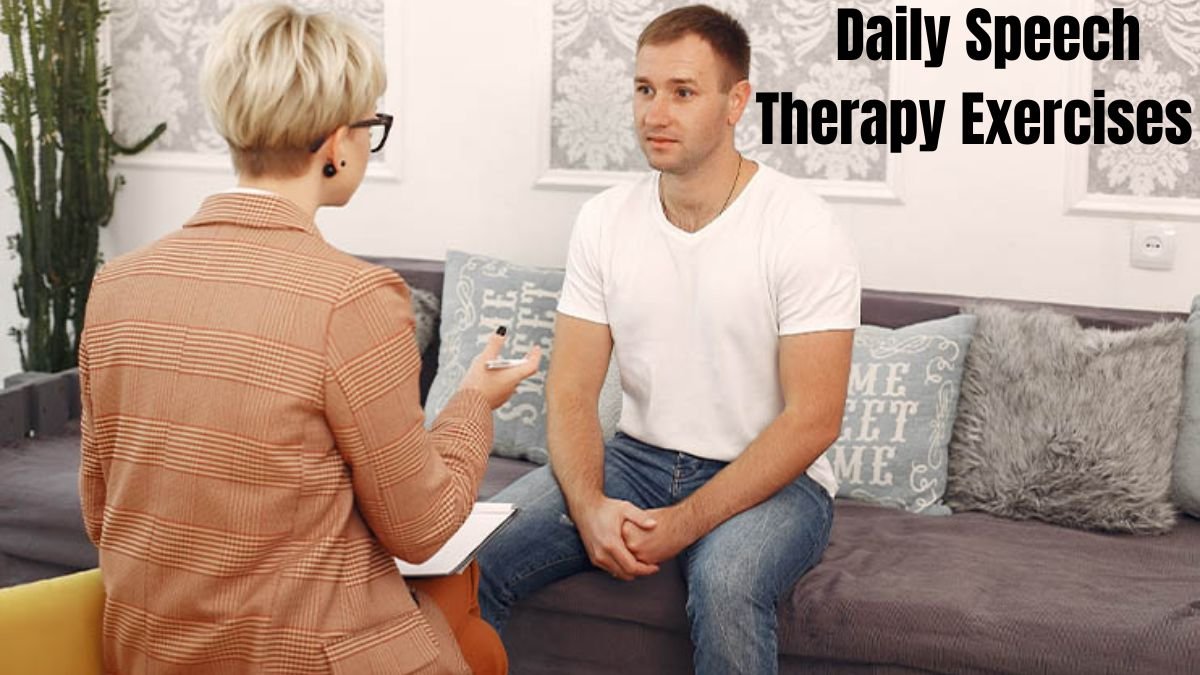
The most difficult thing for a person suffering from aphasia may be the understanding or speaking or expression of words correctly. The condition is often due to any neurological condition like a stroke, head injury, or brain tumor. With speech therapy and continued practice, however, a person can slowly regain language and communication skills.
Today, we will discuss the best daily speech therapy exercises for aphasia patients, which not only help in rehabilitation but also restore confidence.
What is Aphasia and How Does It Affect You?
Aphasia is a condition in which a person’s ability to speak, understand, read, and write is affected. The main cause is damage to the brain’s language center — specifically Broca’s area or Wernicke’s area.
For example, some people try to speak but cannot produce the correct words, while others have difficulty understanding what others are saying. It is not a mental illness but a neurological disorder.
Why is Speech Therapy Important?
Speech therapy is one of the most effective treatments for aphasia. This therapy works to reactivate the brain’s neural networks so that the person can learn to speak, understand, and communicate again.
Regular practice increases neuroplasticity in the patient’s brain, leading to the development of new language pathways.
Best Daily Speech Therapy Exercises to Do at Home
Now let’s talk about some simple but effective exercises that aphasia patients can do daily at home. The aim of these exercises is to improve speech, vocabulary, pronunciation, and confidence.
Word Repetition Practice
This is the most basic but important exercise. The patient should start with simple words daily, such as — “mother,” “home,” “water,” “food,” etc. Gradually move towards more complex words such as — “book”, “school”, “beautiful”, “trust”.
How to do it: Have a family member or therapist say the word.
The patient should try to repeat it.
Don’t worry about mispronunciation initially; the goal is gradual improvement.
Picture Identification and Naming (Picture Naming Exercise)
This exercise strengthens the individual’s visual memory and word recall ability.
How to do it: Show pictures of everyday objects from a book or mobile app — such as fruits, animals, objects.
Ask the patient: “What is this?”
If they can’t recall the word, provide a hint.
This exercise connects language to real-life contexts.
Speech Training with Music and Songs (Singing Therapy)
Many studies have proven that music plays a miraculous role in language rehabilitation. When a person repeats song lyrics, both hemispheres of the brain are activated.
How to do it: Hum a simple part of your favorite song or hymn.
Gradually try to pronounce the words.
This not only increases word fluency but also restores confidence.
Word Association Game
This exercise trains the brain to think quickly and make connections.
How to do it: Say a word, such as “mango”.
The patient has to say another word associated with it, such as “fruit”, “sweet”, or “tree”.
This type of chain trains the brain through the process of active recall.
Reading and Repeating Practice (Reading Aloud)
The habit of reading proves quite helpful in aphasia. It improves both speech rhythm and pronunciation
How to do it: Start with short poems or children’s books.
Read each word slowly and aloud.
Family members should listen and gently correct any mistakes.
Mirror Exercise (Mirror Speech Practice)
This exercise teaches the individual to control their facial expressions and pronunciation.
How to do it: Sit in front of a mirror and observe your mouth movements.
Pay attention to the position of your lips and the movement of your tongue while speaking words.
This helps the person understand how to pronounce words correctly.
Sentence Formation Practice
Often, in aphasia, individuals remember words but find it difficult to combine them into sentences.
How to do it: Provide 2-3 words on a topic, such as “mother,” “food,” “cook.”
Ask the patient to form a sentence using these words — “Mother is cooking food.”
This improves sentence structure.
Daily Conversation Practice
Practice speaking short conversations throughout the day, such as:
- “How are you?”
- “I am fine.”
- “Give me water.”
- “Let’s go outside.”
This helps the person learn to use language in real-life situations.
Take Care of Mental Health
Aphasia is not just a struggle with words, but also with emotions. Patients often feel frustrated, helpless, or irritable. Therefore, emotional support is crucial along with speech therapy Family members should be patient, encourage small improvements, and celebrate every step of progress.
The Role of a Professional Speech Therapist
Home practice is essential, but therapy under the supervision of a professional Speech-Language Pathologist (SLP) is even more effective.
They create personalized programs according to the individual’s condition, such as :
- Language Rebuilding Techniques
- Use of Electronic Speech Devices
- Cognitive and Memory Training
Patience and Consistency are Key
Aphasia treatment doesn’t happen overnight. It is a slow but progressive process. Regular speech therapy, family support, and a positive mental attitude—these are the three pillars that help a person regain their voice and confidence.
Conclusion: There is life beyond words
Aphasia may take away a person’s words, but not their vitality, emotions, or ability to think Every exercise, every small step forward, is a ray of hope A little patience, a little effort, and a lot of love that’s the real cure for aphasia.
