
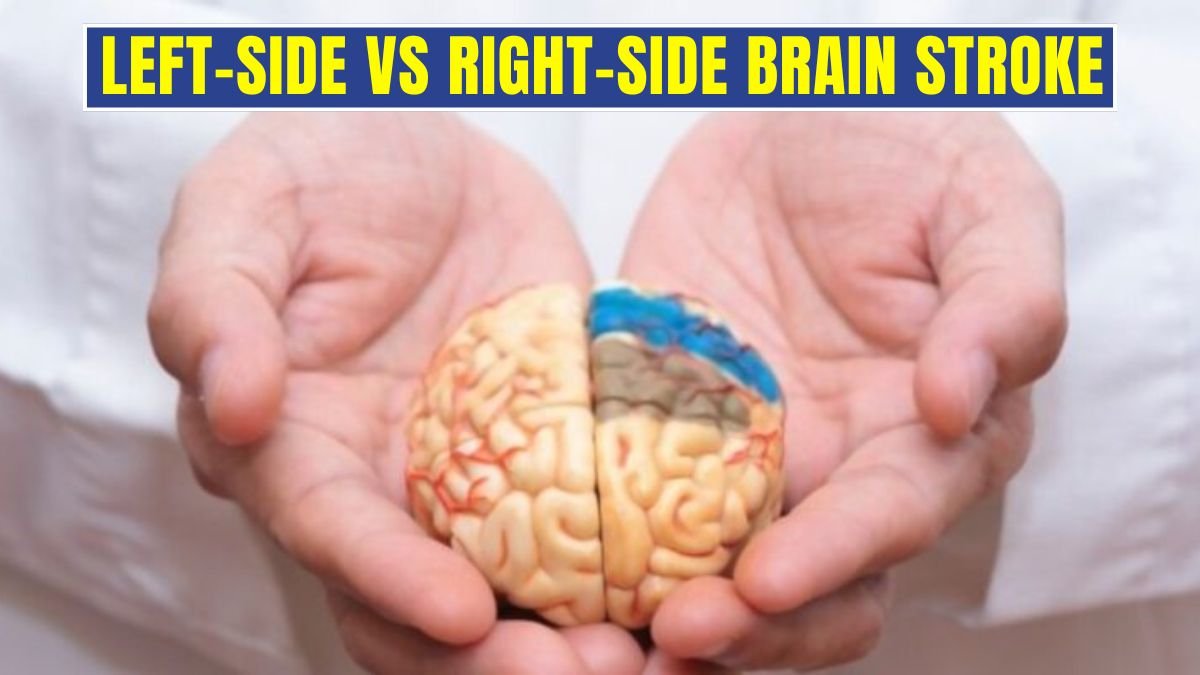
Left-Side vs Right-Side Brain Stroke: A person is identified by his thoughts, and the biggest medium to convey thoughts to the world is language. We remain connected to the society only by speaking, writing, reading and understanding. But when a person’s language and communication skills suddenly become impaired, life can become extremely difficult. This condition is called aphasia. It is a language disorder caused by brain damage and is especially common after a stroke. In aphasia, a person has difficulty speaking, understanding, reading and writing. It is not a mental illness, but the result of specific parts of the brain being affected. People suffering from this problem often understand and feel everything, but are unable to find the right words and this causes their feelings to remain trapped within.
Main Causes of Aphasia
The most common cause of aphasia is stroke. When a blockage or rupture of a blood vessel in the brain disrupts the flow of blood and oxygen to the brain. This condition damages brain cells, and if this damage occurs in areas that control language, aphasia develops. Stroke cases have risen in India, leading to a rise in the incidence of aphasia.
Although stroke is the most common cause, a serious head injury can also cause brain damage. Brain damage can occur in road accidents, sports injuries, or falls. Neurological disorders such as brain tumors, brain infections, brain swelling, or dementia can also cause aphasia. In some cases, it develops gradually, and many people dismiss the initial symptoms as normal forgetfulness or stress, but it could be a sign of a serious problem.
Different Types of Aphasia
Aphasia manifests in different forms, and the way language is affected differs in each type. One type is called expressive aphasia, in which a person has difficulty speaking. They can think, but the correct words cannot form their mouth. They speak in short, fragmented sentences, but they generally understand others well.
The second type is receptive aphasia, in which a person has difficulty understanding others. Interestingly, such people speak very easily, but their words are not meaningful, and the listener cannot understand what they are saying.
The third type is anomic aphasia, in which a person cannot recall the correct words. They know what they want to say, but the words suddenly disappear from their mind.
The most severe form is global aphasia. In this condition, both understanding and speech are severely affected. The person cannot read or write, and communication becomes almost impossible. This condition is often caused by a severe stroke or damage to a large part of the brain.
Another type is primary progressive aphasia. It is not caused by the stroke itself but by gradual changes in the brain, such as frontotemporal dementia. A person’s language ability diminishes over time and may eventually disappear completely.
Symptoms and Diagnosis of Aphasia
Symptoms of aphasia can appear suddenly or develop gradually. Immediately after a stroke, the patient’s speech may become slurred or they may not be able to pronounce words correctly. In some cases, the person may be unable to understand what others are saying. Reading and writing abilities are also affected. Sometimes, while talking, the person may stop and cannot complete sentences. Some people may utter words that do not make sense, confusing family members.
Aphasia is a challenging and often frustrating condition that significantly impacts a person’s ability to communicate. When someone’s linguistic behavior abruptly changes and they have difficulty speaking in a normal way, such a case should not be disregarded. It may be a stroke or a serious neurological disorder, and the person must be taken to the hospital immediately.
Treatment and Recovery Process
Aphasia treatment involves a carefully planned and patient approach. The major treatment is speech and language therapy. In this therapy, experts teach patients to get back their language skills, to recognize words, and to make grammatically correct sentences. Patients also work on their reading and writing skills. In some cases, communicative skills can be developed through the use of pictures, gestures, and technology, such as mobile apps. The therapeutic aim is not only to regain the lost language but also to provide different ways of communication so that the person can share their thoughts.
Recovery depends on the individual. Improvement is usually rapid within the first six months to a year, but long-term progress is possible with continued practice. This depends on the extent of brain damage, when treatment began, the patient’s age, and family support. Patience, a positive environment, and regular practice speed up recovery.
The Role of the Patient and Family
A person suffering from aphasia may appear physically normal, but is mentally struggling. In this situation, the role of the family is crucial. When speaking to the patient, one should use slow and clear language and give them time to express themselves. Repeatedly interrupting or speaking over them undermines their confidence. Keeping communication simple and creating a calm environment is extremely helpful. It is important to remember that the patient understands a lot but is unable to put it into words, so empathy and patience are the best remedies.
Conclusion
Aphasia is a challenging condition, but it is not without hope. Timely identification, prompt treatment, and family support can restore a patient’s life to normal. It is important to understand that aphasia does not mean reduced intelligence. The person retains the ability to think and understand, but simply has difficulty finding words. Society must raise awareness about this disorder so that such people face support and understanding, not ridicule. A person may lose words, but not hope. With the right care and treatment, the light of communication can be rekindled.
