
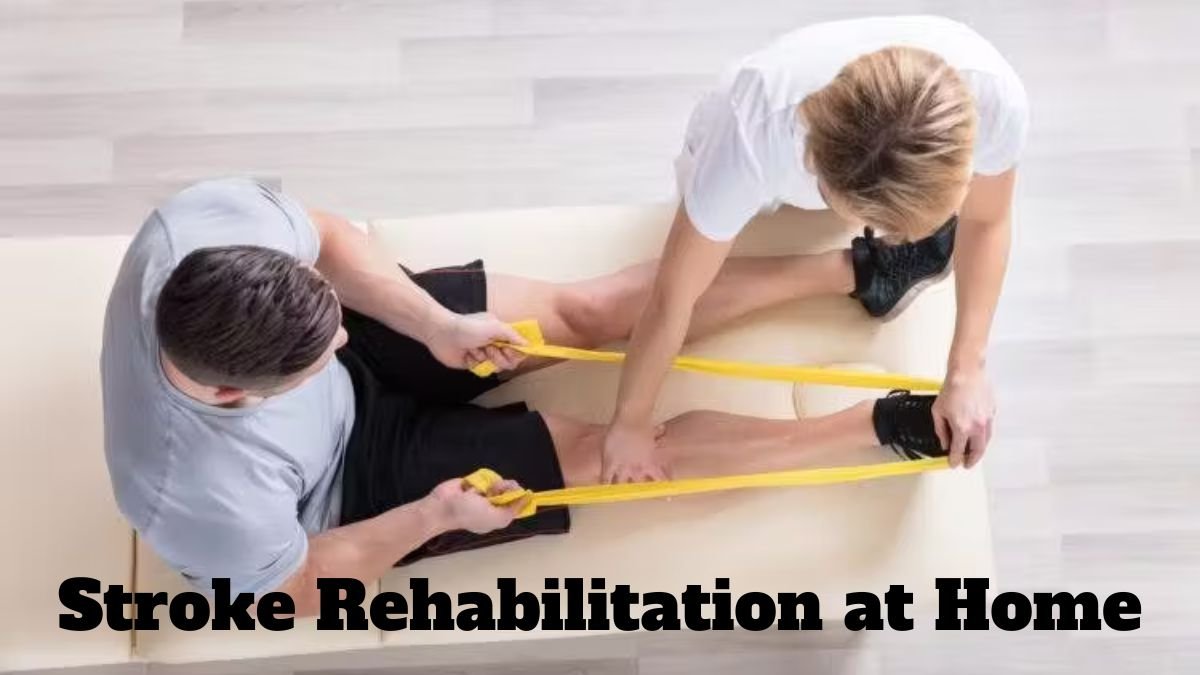
Stroke, or paralysis, is a condition in which the brain lacks adequate blood supply, affecting the movement of a part of the body. Patients experience difficulty walking, speaking, and performing daily activities. The biggest challenge after hospital treatment is recovery, or rehabilitation. This process requires long, patient, and regular practice. Fortunately, many exercises and therapies are available today that can be practiced at home. This article provides a step-by-step exercise routine for stroke recovery at home, which will help restore strength, flexibility, and self-reliance.
Why Rehabilitation is Needed After a Stroke
After a stroke, many nerves and muscles in the brain lose control. Patients may find even simple everyday tasks, such as dressing, eating, or walking, difficult. Rehabilitation becomes essential in this situation, as it strengthens not only the body but also the mind. A combination of physical therapy, occupational therapy, and speech therapy helps patients gradually return to normal life.
Exercising at home provides a sense of security, family support, and makes it easier to continue regular exercise.
Preparing for Stroke Recovery at Home
Before starting any exercise, it’s important to ensure a safe environment. The floor should be non-slip, there should be adequate light and ventilation, and a family member should be present nearby. Begin exercising only after consulting a doctor or physiotherapist. In the initial days, start with light movements and gradually progress to more strenuous exercises.
Another thing to remember—every patient’s condition is different. Some may experience weakness only in their hands, while others may experience weakness on one side of the body. Therefore, exercise should be selected based on their physical ability and tolerance.
Step 1: Basic Stretching and Movement
After a stroke, the first step is to reduce stiffness in the body. Gentle stretching exercises are extremely useful for this.
You can have the patient sit in an upright or slightly bent position and perform gentle stretches of the arms and legs. For example, slowly raising and lowering the arms, bending and straightening the legs, and rotating the neck left and right—all of these actions help restore flexibility.
Initially, stretch for only 5-10 minutes and increase the time as the body responds. Patience is crucial in this phase.
Step Two: Exercises to Improve Balance and Core Strength
After a stroke, patients often lose balance. There’s a fear of falling while walking or standing. Balance exercises are essential to improve this condition.
You can have the patient stand with support from a wall or chair. Then, have them try to stand on one leg for a few seconds. In addition, light yoga postures like Tadasana and Vrikshasana are also useful in increasing core strength.
When performing balance exercises, keep someone nearby to prevent the possibility of a fall. Gradually, the body regains stability and self-confidence increases.
Step 3: Increasing Hand Strength and Flexibility
Most stroke patients experience weakened hand muscles. Therefore, hand exercises are crucial.
Squeezing a rubber ball, lifting a water bottle, or exercising with light weights—all of these activities improve grip and strength. Additionally, practicing opening and closing fingers and slowly raising your hands from a table are also effective.
These exercises gradually enable the patient to perform daily activities, such as dressing or eating, on their own.
Step 4: Improving Leg Strength and Gait
Leg movement and balance are most affected after a stroke. Therefore, regular leg exercises are crucial.
Initially, light exercises such as bending and straightening the knees in a seated position and moving the ankles up and down can be performed. After this, begin walking exercises under the supervision of a physiotherapist.
Gradually, you can increase the walking distance with the help of a walker or cane. This process improves gait and helps the patient become independent.
Step Five: Speech and Facial Muscle Exercises
Stroke can affect not only the body but also speech. Therefore, speech and facial muscle exercises should be included in the routine.
Sitting in front of a mirror and practicing smiling, stretching the lips, sticking out the tongue, and speaking slowly is very beneficial. Try repeatedly saying vowels like “aa,” “ee,” and “o.” This reactivates the oral muscles and improves speech.
Include family members in conversations to give the patient confidence and reduce mental stress.
Step Six: Psychological and Emotional Rehabilitation
After a stroke, not only physical but also mental rehabilitation is equally important. Many patients experience depression, anger, or despair. In such situations, family support and a positive environment are a great support.
Tell the patient inspiring stories, listen to soft music, or practice meditation. This calms the mind and increases brain activity.
Psychological counseling may also be necessary, especially for patients who are struggling with self-confidence.
Conclusion
Stroke rehabilitation at home is not only possible, but in many cases, it proves to be more effective. It is essential that it is done with proper direction and regularity. Gradually, the body regains its former strength and flexibility.
The journey of stroke recovery is difficult, but not impossible. If you maintain faith, patience, and consistent practice, one day you will be able to stand firmly on your feet again.
