
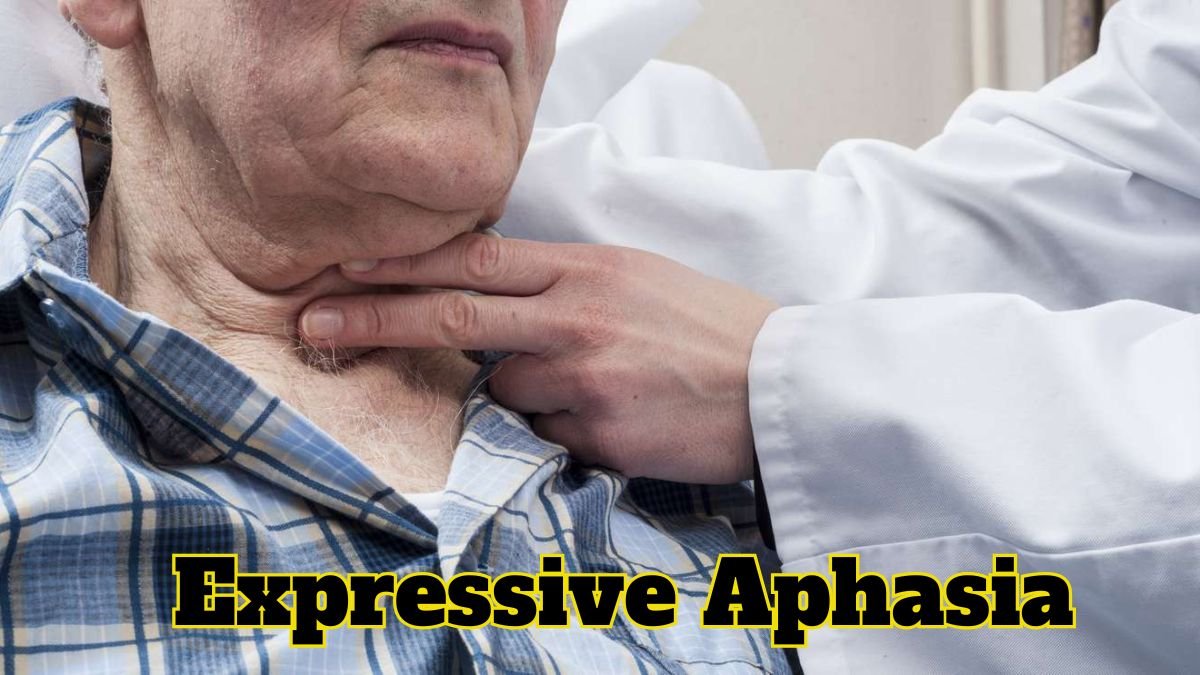
Language and communication are an integral part of human life. We express our feelings, thoughts, and social relationships through language. However, sometimes brain injury, stroke, or neurological diseases can affect a person’s language and communication abilities. This condition is called aphasia.
When aphasia primarily affects a person’s ability to speak and express their thoughts correctly, it is called expressive aphasia. It is also known as Broca’s aphasia.
What is Expressive Aphasia?
Expressive aphasia is a neurological disorder caused by injury or damage to the left side of the brain. This part is responsible for language production and communication. In this condition, a person is unable to speak words correctly but can usually understand what others say.
A person with expressive aphasia speaks with slurred speech and has difficulty putting words together to form sentences. This condition profoundly impacts a person’s daily life and social interaction.
Causes of Expressive Aphasia
The main causes of expressive aphasia are brain injury or damage. These include:
Stroke: The most common cause is a stroke. When blood flow to the left side of the brain is disrupted, the language center is affected.
Brain Injury: An accident or head injury can cause severe damage to the language center.
Brain Tumor: Tumors can put pressure on the part of the brain responsible for language and communication.
Neurodegenerative Diseases: Diseases such as Alzheimer’s or dementia gradually affect brain function.
Warning Signs
Symptoms of expressive aphasia can appear suddenly or gradually. Key signs include:
Difficulty speaking: The person is unable to pronounce words correctly and express their thoughts.
Sentence formation problems: The person has difficulty forming sentences and putting words together.
Writing problems: The person may also experience difficulty writing.
Dissatisfaction and mental stress: The inability to express oneself can lead to frustration and mental stress.
Social isolation: Difficulty speaking and understanding causes the person to gradually withdraw from social activities.
Diagnosis of Expressive Aphasia
The diagnosis of expressive aphasia is made under the supervision of a speech-language pathologist (SLP) and a neurologist. The following procedures are used:
Language assessment: The person’s ability to speak, understand, read, and write is tested.
Brain imaging: Brain damage is assessed through MRI and CT scans.
Neurological testing: Brain function and neurological health are assessed.
Only after a diagnosis can an appropriate therapy plan be developed to help improve the person’s language and communication abilities.
Treatment of Expressive Aphasia
Treatment of expressive aphasia is complex and requires consistent effort and time. Its primary goal is to restore the individual’s language, communication, and social engagement.
Speech and Language Therapy
Under the guidance of an SLP, the individual is encouraged to practice speaking, listening, reading, and writing. The following techniques are used:
Melodic Intonation Therapy: Practicing words and sentences with music and songs.
Constraint-Induced Language Therapy: Communicating only through words and sentences.
Visual Cues and Gestures: Improving language comprehension through pictures and gestures.
Technological Support
In today’s digital age, mobile apps and tools play an important role in the treatment of expressive aphasia. Apps like Constant Therapy, Lingraphica TalkPath, and Speech Blubs help improve word recognition, sentence formation, pronunciation correction, and communication skills.
These apps help track the patient’s progress and make therapy more effective.
Social and Family Support
Family and community support is extremely important for the patient. Families should learn how to communicate with the patient, listen patiently, and provide a positive environment.
Participation in group therapy and social activities increases the patient’s self-confidence and strengthens social connections.
Mental and Emotional Support
A person with expressive aphasia often experiences mental stress, frustration, and loneliness. During this time, the support of the SLP and family helps build mental strength and motivates improvement.
Improvement and Expectations
Expressive aphasia improves gradually. It requires time, regular practice, and proper guidance.
Linguistic improvement: Word recognition, sentence formation, reading, and writing skills improve.
Mental and emotional improvement: The patient gains confidence and mental stability.
Social reactivation: The patient gradually begins to participate in social activities, and self-esteem increases.
Conclusion
Expressive aphasia isn’t just a language impairment; it impacts a person’s identity, self-esteem, and social life. With proper guidance, regular speech therapy, technical assistance, and family support, patients can gradually regain their language and communication abilities.
With the experience and patient guidance of an SLP, a person with expressive aphasia can communicate, actively participate in society, and improve their quality of life.
Treatment for expressive aphasia is not just about regaining words, but also about regaining life, self-confidence, and independence.
