
Every small and large function in our body is performed with the help of some type of muscle. When we write, button buttons, tie shoelaces, use a mobile phone, or cook—the precise movements required in all these tasks are called fine motor skills.
Fine motor skills essentially refer to the ability of our hands and fingers to perform small and precise tasks. These skills are fundamental to the ease of our daily lives. However, sometimes these abilities are impaired after an injury, stroke, neurological problems, or surgery. In such cases, therapy exercises are needed to help restore the function of the hands and fingers.
Causes of Weakening of Fine Motor Skills
There are many reasons behind the weakening of fine motor skills. The most common causes include stroke, spinal injury, nerve damage, arthritis, or the condition following a fracture. Sometimes, aging or neurological conditions like Parkinson’s disease or cerebral palsy can also lead to a loss of hand movement and strength.
In addition, prolonged inactivity or excessive use of the hands can also affect these abilities. As a result, a person may find it difficult to perform everyday tasks like dressing, writing, washing dishes, or cooking.
Why the Recovery Process is Important
Recovery of fine motor skills is crucial not only physically but also mentally. When a person cannot use their hands properly, feelings like lack of confidence, frustration, and anxiety arise.
In such situations, therapy exercises not only strengthen the body but also provide positive energy to the mind. Gradually, the person realizes that they can perform their tasks on their own again. This self-reliance is a key part of the recovery process.
How Hand and Finger Therapy Exercises Help
Therapy exercises aim not only to strengthen muscles, but also to improve coordination, flexibility, and balance. These exercises create a better connection between nerves and muscles, improving finger movement.
With regular practice, a person not only regains the ability to hold or lift objects, but also improves grip strength. Gradually, they can resume tasks like writing, cooking, and typing.
Some Effective Therapy Exercises That Aid Recovery
First, it’s important to understand that each individual’s recovery process is different. Therefore, it’s essential to consult a physiotherapist or occupational therapist before starting any exercise.
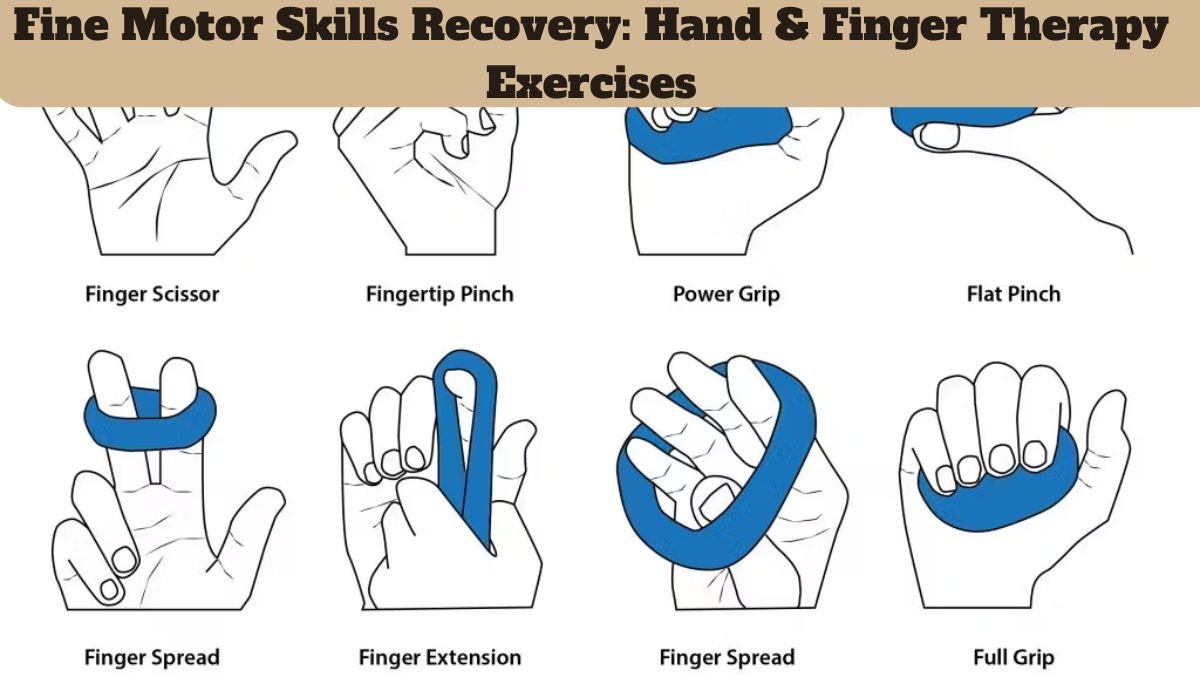
However, there are some simple and safe exercises that help people of all ages. Some of the most important ones are—
- Finger Taping Exercise:
In this exercise, you try to connect your thumb to the other fingers one by one. This simple exercise improves finger coordination and restores flexibility. - Stress Ball Squeezing:
This exercise is extremely useful for strengthening the muscles of the hands. Simply hold a soft stress ball and gently squeeze and release it. This increases grip strength and improves blood circulation. - Finger Lifting:
Place your hands flat on a table and try to slowly lift each finger one by one. This is very beneficial for muscle activation. - Pencil Rolling:
Rolling a pencil or pen back and forth between your fingers improves coordination and control. - Towel Squeeze and Rotation:
Try squeezing a towel as if you were wringing out water. This exercise revitalizes hand strength.
Doing these exercises for a few minutes daily will gradually lead to improvements.
The Importance of Patience and Consistency During Recovery
Recovery of fine motor skills isn’t possible in a day or a week. It’s a long and patient process. Mild pain, fatigue, or discomfort may be felt initially, but this is a sign that the muscles are becoming active again.
Sometimes, patients quit exercises if they don’t see quick results, but this is a major mistake. Consistency is the key to success. Gradually increase the level of difficulty as advised by your doctor and therapist.
Mental Motivation and Family Support
Mental support and family support are equally important as physical therapy. When the family maintains a positive attitude and encourages the patient, the speed of recovery increases exponentially.
An inspiring environment, small goals, and noting daily progress keep morale high. Family members should also help keep the patient away from discouragement and praise them for every small improvement.
The Importance of Physiotherapy and Occupational Therapy
Sometimes, home exercises alone are not enough. Expert assistance is needed.
Physiotherapy focuses on improving muscle function, while occupational therapy prepares a person to resume everyday tasks.
The combined practice of both improves physical and mental well-being. Many hospitals and rehabilitation centers now offer modern equipment for these therapies, which speeds recovery.
Conclusion: Consistent effort is the key to success.
Recovering fine motor skills isn’t a one-day task; it’s an ongoing process that requires patience, confidence, and regular practice.
Hand and finger therapy exercises rejuvenate the body and empower a person. Every small improvement is like a new hope.
So if you or a loved one is struggling with this problem, remember—with persistence, positive thinking, and the right guidance, you can regain the strength and flexibility of your hands.
