
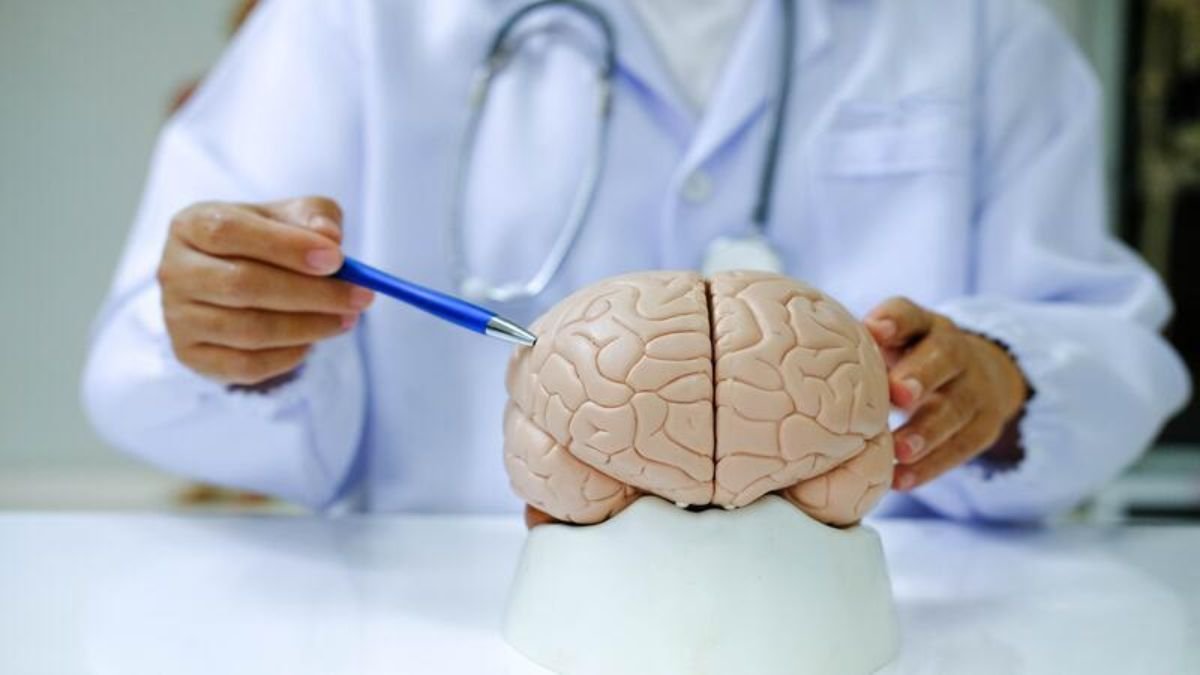
The human brain is one of nature’s most amazing creations. It not only possesses the ability to think and understand, but also the power to heal itself. When a person suffers a brain injury—such as a stroke, trauma, or neurological disorder—it was previously believed that the damage was permanent. But modern science has completely changed this notion. “Brain plasticity” or “neuroplasticity” has proven that the brain can reorganize itself, form new neural connections, and regain lost abilities.
Today, the future of neurorecovery is based on this principle—where the brain’s ability to heal itself is being combined with new dimensions of science, technology, and medicine.
What is Brain Plasticity?
Brain plasticity refers to the brain’s remarkable ability to change and reorganize itself in response to experiences, learning, and injury. When an area of the brain is injured, surrounding neurons take over that function by forming new connections. This process not only enables recovery but also demonstrates that the brain is not a static organ, but a living, adaptable system.
It was previously believed that brain development stopped after childhood. However, scientific studies have now proven that changes are possible throughout life. This “lifelong plasticity” is the foundation of neurorecovery.
How the Brain Reorganizes Itself After Injury
When a person suffers a stroke or brain injury, some parts of the brain lose their normal functions. But the brain immediately begins the process of “rewiring.” This activates surrounding healthy neurons to make up for the lost abilities by forming new connections.
For example, if a person has difficulty speaking (called aphasia), speech therapy and neural stimulation can help other parts of the brain learn that function. This process can last for months or years, but it’s proof that brain plasticity is alive and can improve itself every day.
The Role of Modern Science in Neuro Recovery
Neuroscience has seen tremendous advances in recent years. Scientists now understand that medication or surgery alone is not enough to activate the brain.
- Mental exercises,
- Physical rehabilitation,
- Technological tools, and
- Emotional support
all combine to accelerate the recovery process.
New-age technologies such as neurofeedback, virtual reality (VR) therapy, brain-machine interfaces, and transcranial magnetic stimulation (TMS) are now helping to “retrain” the brain. These techniques reactivate inactive parts of the brain and strengthen neural pathways.
The New Face of Rehabilitation: A Fusion of Experience and Technology
Today’s neurorecovery programs are no longer the same. They are no longer limited to physical therapy or medication. Patients are now trained to practice real-time situations in virtual environments.
For example, through virtual reality therapy, patients can relearn how to walk, grasp, or react while their brains are creating new neural mapping.
Using artificial intelligence (AI), doctors track patients’ brain activity data, helping them understand which therapies are most effective. This enables personalized recovery.
The Role of Emotional and Mental Health
Neurorecovery isn’t just a physical process; it’s also a mental journey. When a person suffers a brain injury, their self-confidence, emotions, and thinking abilities are profoundly affected.
Techniques like mindfulness, cognitive behavioral therapy (CBT), and motivational therapy play a crucial role here. Patients are taught that the brain can be trained in positive ways every day. This not only accelerates the brain’s regeneration process but also increases a person’s self-confidence.
The Scientific Basis Behind Brain Plasticity
Brain plasticity is rooted in synaptic connections. When we learn or repeat something new, the connections between brain neurons strengthen. This process is called “Hebbian Learning.” It means “Neurons that fire together, wire together.”
This same principle is used in neurorecovery. When a patient repeatedly practices an activity, active neurons in the brain form new circuits. Gradually, lost abilities begin to return.
The Role of Nutrition and Lifestyle
Diet, sleep, and lifestyle also play a vital role in brain recovery. Nutrients such as antioxidants, omega-3 fatty acids, and B vitamins strengthen neural health.
Activities like yoga and meditation not only provide mental peace but also improve neurotransmitter balance, accelerating the brain’s “rewiring” process.
Future Direction: Is Full Recovery Possible?
Science has made great strides in this direction. It is now entirely possible for even people with severe brain injuries to regain their abilities.
New methods like stem cell therapy, gene editing, and nanotechnology could prove revolutionary for brain repair in the future.
Furthermore, experiments like the “Brain-Computer Interface” are showing that even paralyzed patients can regain control through the partnership between machine and brain.
A Message for Society and the Medical World
Neuro recovery is not just a medical subject, but a symbol of hope for humanity. Every person who has suffered an injury or stroke holds within them the potential for recovery.
Society and governments must understand that investing in neuro recovery is equivalent to investing in health security for future generations. Hospitals, rehabilitation centers, and research institutions should work together to further this cause.
Conclusion
“Brain plasticity” has taught us that the brain never gives up. No matter how severe the injury, every neuron has the ability to reawaken itself.
The future of neuro recovery is no longer just a medical subject; it has become a fusion of human survival, science, and hope.
In the coming years, as the intersection of brain plasticity and technology becomes stronger, perhaps we will enter an era where there will be no such thing as an “impossible recovery.”
This brain story reminds us that our thoughts and efforts are the greatest forces behind our recovery.
