
When a patient’s impairments of speaking, understanding, reading, or writing are somewhat miscellaneous, it is viewed as a case of aphasia. Usually, this is caused by stroke, brain injury, or neurological disease. The patient of aphasia cannot get their thoughts into words; no communication is available to them. But even people who cannot speak seem able to sing; thus, music therapy can be an exciting tool.
The meaning behind sound and song goes much deeper than mere vibrations of air; they go into the brain, enlivening far more parts than those associated with language or rhythm or emotion. Thus, when the patient loses the language, music can restore it.
Aphasia and How It Afflicts Language
Aphasia is the damage of the language-using areas in a person’s brain, either partially or completely. Mostly, this happens when there is injury to the Broca’s or Wernicke’s areas, the two main areas in the brain responsible for language understanding and speech.
Aphasia renders individuals incapable of expressing their thoughts in appropriate words. Sometimes they may know the word, but aphasia gets in the way of either their speaking it or understanding the sentences of another person. It therefore renders such disciples not only unable to communicate but also confidence and social life downfalls.
What Music Therapy Is and How It Works
Music Therapy is a form of treatment that makes use of music, singing, rhythm, and beat in an attempt to reawaken the brain abilities for language. This is applied with assessment and treatment by a qualified music therapist.
The basic principle of music therapy is neuroplasticity, which means that the brain has the ability to form new neural connections and recall previously stored skills. When the individual endeavors to sing or repeat words to a rhythm, the brain parts connected with music and rhythm will slowly take over the function for language impairment.
Therefore, words may be one of the hardest to regain for language, while music may actually restore that language.
Unique Association Between Music and Brain
Generally, language functioning resides in the left hemisphere of the brain, whereas faculties relative to sound, emotion, and rhythm are governed by the right. When the left comes under attack thus (in a case of a stroke), the ability to use language becomes impaired. Music, on the other hand, activates the right hemisphere, which then may act to bring a balance in the brain.
That is so, for it has the ability to combine words, melody, emotions, rhythm, and feelings. Not only does it reactivate memory, but it retrains the muscle control used in actual speech.
Melodic Intonation Therapy (MIT): Speech Therapy Through Music
Melodic Intonation Therapy (MIT) is the most efficacious music therapy method for aphasia patients. The patient is asked to repeat target phrases with a sung intonation.
For example, the patient sings rhythmically the phrase, “I want water,” instead of articulating it. As soon as the patient is well versed in this process, the therapist gradually fades the singing and returns to normal speech.
MIT is not about repeating words but is about providing a different route whereby the brain remains activated so as to stimulate the old language faculties.
How Music Therapy Helps – Improving Communication
Music therapy helps a person with aphasia on many levels.
First, it enhances the ability to produce language.
Second, it improves memory, attention, and emotional control.
Third, it gives the person confidence that they can communicate with others again.
When a person sings a song he or she knows well, his or her brain remembers the song words. Later on, those same words will be used for talking. It works in a similar way when saying rhythmic phrases to perfect word pronunciation and rhythm.
Additionally, music lowers the production of stress hormones and raises dopamine levels in the brain, creating feelings of pleasure and motivation. That pleasant sensation contributes to the success of these interventions.
Starting Music Therapy at Home
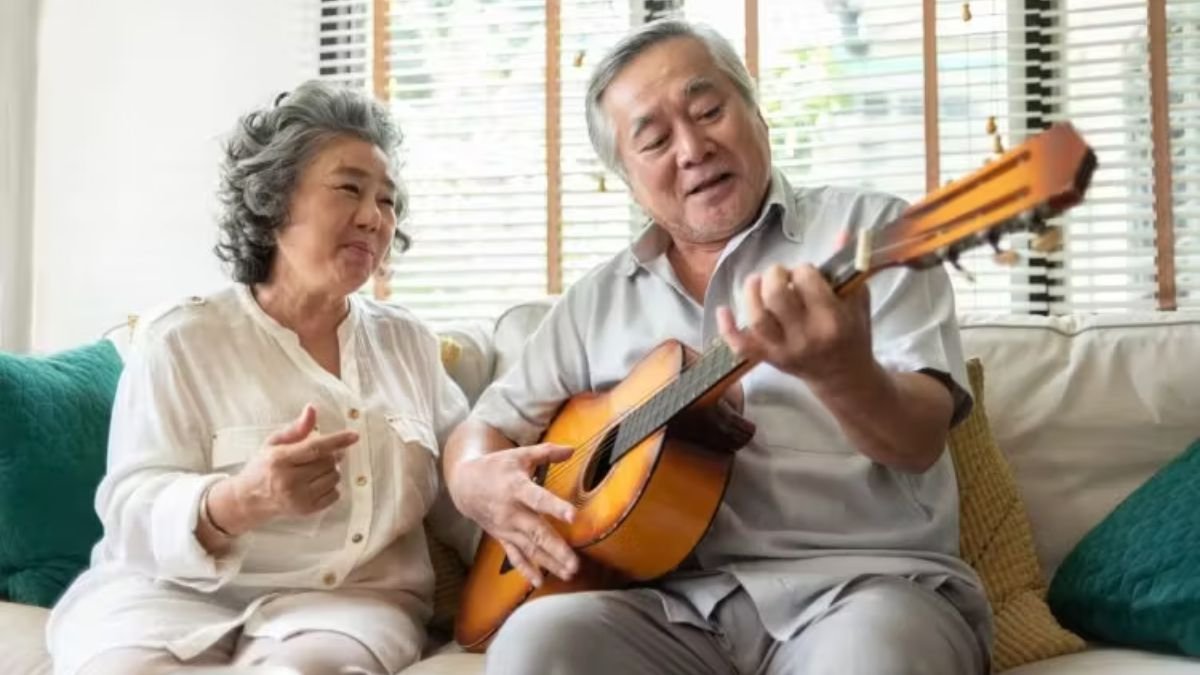
Not every patient is able to go to music therapy clinics; that said, one can get started with music therapy at home. First, start by having the patient sing along to songs or hymns that they remember well. The activation of familiar tunes stimulates the old areas of the brain in turning on word recall.
The next stage could be singing or saying a few words from those songs, reinforcing the patient’s confidence in using their voice. Moving one’s hands or tapping one’s feet to the beat of music would also help build the necessary neurologic connections.
But for the rehabilitation of the patient, what counts is the support, love, and encouragement of family and friends.
Family support is very important when it comes to aphasia. When family members sit by the patient and sing or encourage their attempts, the recovery process is hastened. The patient must feel that their trials are meaningful and that they are not alone.
Family members ought to be patient, give time to the patient, and provide positive feedback for every small step forward made. This sort of emotional support is far more potent than any therapy.
Psychological Benefits – Combining the Restoration of Self-Confidence and Socialising
Music therapy not only tackles speech and language problems but also has a heavy share of consequences on mental health. An aphasic person most of the time becomes isolated from society because he cannot speak or feels uncomfortable expressing himself.
But when he expresses his feelings through music, it becomes a form of healing for his soul. He learns to smile again, connect, and feel his presence.
Scientific Evidence and Research
Several studies have found that Melodic Intonation Therapy can accelerate the process of language rehabilitation. Research at Harvard and Boston University has shown that music-based exercises activate the right hemisphere of the brain, helping to restore language skills.
Furthermore, functional MRI scans have shown that listening to music or singing activates areas of the brain not normally used for language. This means that music “rewires” the brain.
Limitations and Precautions of Music Therapy
Although music therapy is highly effective, it is important to do it correctly. Each patient’s condition is unique, so it’s important to consult a Speech-Language Pathologist or Music Therapist before starting therapy.
Patients should take breaks when they feel tired and should not be forced to sing. Gradually, both their ability and confidence will increase.
The Help of Music-Based Technology
Many apps and online platforms are making music therapy more accessible. Apps like SingFit, Tactus Therapy, and Constant Therapy offer interactive music sessions that can be used from home.
By connecting with a music therapist via video call, patients can monitor their progress and receive expert guidance. This feature is especially useful for those who live in remote areas or cannot travel to a clinic.
Conclusion
Aphasia can turn a person’s life upside down, but music can restore it. Music therapy not only helps restore speech, but also rejuvenates self-confidence, self-esteem, and social connection.
When someone rediscovers lost language through the rhythm of song, it’s not just a healing experience, but a rebirth.
Music is a language beyond words that everyone understands. And that’s why music therapy, for those struggling with aphasia, is not just a cure—it’s a beautiful way to restore their voice.
