
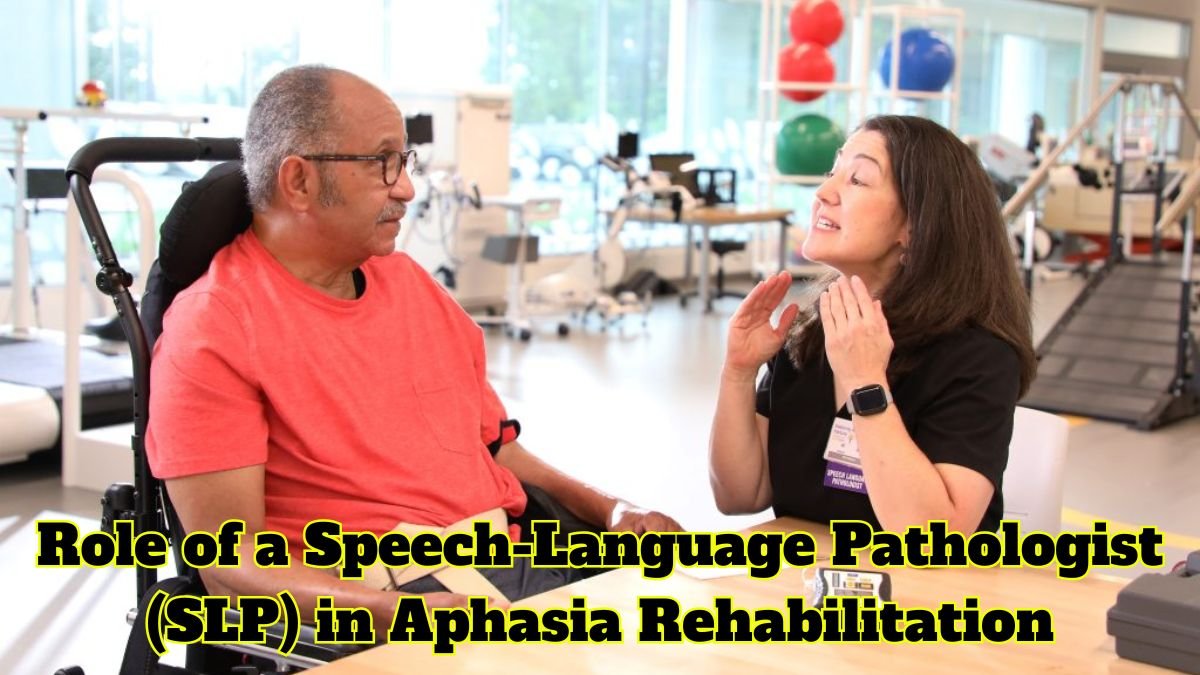
Language and communication are central to human life. Language is considered the quintessence of expressing thoughts and forms the foundation of social and emotional interactions. However, brain injury, stroke, or other neurological conditions can disrupt these abilities, resulting in a condition known as aphasia. Aphasia is a disorder in which a person faces difficulty speaking, reading, understanding, or writing. This complex condition is treated and rehabilitated by a specialized professional—a speech-language pathologist (SLP).
Speech-language pathologists (SLPs) are specialists who diagnose and treat language disorders, along with speech, voice, and swallowing problems. Their role in aphasia rehabilitation is critical, as they help patients regain communication skills while enhancing their overall quality of life.
What is Aphasia?
Aphasia is a neurological disorder that typically occurs due to damage to the left hemisphere of the brain, which controls language and communication. Common causes include strokes, traumatic brain injuries, brain tumors, and neurodegenerative diseases such as Alzheimer’s or dementia.
There are several types of aphasia, each affecting communication differently:
- Broca’s aphasia: Patients struggle to articulate words but can comprehend language.
- Wernicke’s aphasia: Patients speak fluently, but their sentences may lack meaning or coherence.
- Global aphasia: Affects both understanding and speech severely.
- Anomic aphasia: Difficulty recalling words, affecting naming and expression.
These variations highlight the importance of SLP intervention, as aphasia can significantly affect psychological well-being. Patients may experience loss of identity and self-esteem because they cannot express their needs or communicate effectively with loved ones.
The Role of an SLP in Aphasia Rehabilitation
Speech-language pathologists play a multi-faceted role in aphasia rehabilitation. Their responsibilities extend beyond language recovery to supporting the patient’s reintegration into society. Key roles include:
- Diagnosing communication difficulties.
- Designing individualized language rehabilitation programs.
- Facilitating recovery in speaking, understanding, reading, and writing.
- Training family members to communicate effectively with the patient.
Assessment: The First Step in Rehabilitation
The initial step in aphasia rehabilitation is a comprehensive assessment. SLPs use standardized tools such as the Western Aphasia Battery (WAB) and the Boston Diagnostic Aphasia Examination (BDAE) to determine the type and severity of aphasia.
These assessments evaluate speech production, comprehension, reading, and writing skills. The data gathered is essential for creating a personalized treatment plan tailored to the patient’s needs.
Individualized Treatment Planning
Each patient’s brain injury and language ability differ, requiring customized rehabilitation. SLPs develop individualized treatment plans:
- Patients with speech difficulties may focus on articulation exercises.
- Patients struggling to recall words may undergo naming therapy.
- Achievable, incremental goals help patients experience gradual improvement in communication.
Therapeutic Techniques in Aphasia Rehabilitation
SLPs employ a variety of techniques to promote language recovery:
- Melodic Intonation Therapy: Using singing or humming to activate healthy brain areas and improve speech articulation.
- Constraint-Induced Language Therapy (CILT): Encourages patients to communicate only through speech, enhancing verbal skills.
- Symbolic Gestures and Visual Cues: Using hand gestures, pictures, and objects to aid communication when speech is difficult.
Family and Social Involvement
Aphasia affects not only the patient but also their family. SLPs involve family members in the rehabilitation process:
- Teaching them to speak in simple sentences.
- Encouraging patience and a positive atmosphere.
- Supporting group therapy sessions to build confidence and social connections.
Technology in Therapy
Modern SLPs integrate technology to enhance therapy sessions. Tablets, apps, and computer programs aid in:
- Sentence formation exercises.
- Word recognition practice.
- Improving pronunciation.
Technology makes therapy more engaging and interactive, complementing traditional techniques.
Psychological and Emotional Support
Patients with aphasia often experience frustration, social isolation, and loss of self-esteem. SLPs provide emotional support and guidance, reassuring patients that progress takes time and every small improvement is valuable.
Continuity of Rehabilitation
Aphasia rehabilitation is a long-term process. SLPs ensure that:
- Patients continue practicing at home after therapy sessions.
- Progress is periodically evaluated.
- Treatment plans are adjusted as the patient improves.
Outcomes of Aphasia Rehabilitation
With consistent therapy from a skilled SLP, patients can see significant improvement. Some regain most of their language abilities, while others achieve partial recovery. Early intervention, regular practice, and family support are crucial factors in achieving the best outcomes.
Conclusion
Aphasia rehabilitation is not only about restoring words but also rebuilding a person’s identity and confidence. Speech-language pathologists are essential in this journey, reconnecting the brain with language and reigniting communication in patients’ lives.
Through their expertise, compassion, and innovative approaches, SLPs provide hope and tangible improvement to those struggling with aphasia. No matter the severity, patients under the guidance of a skilled SLP can regain the ability to speak, understand, and actively participate in life—marking the true success of this profession.
