
The greatest strength of a human being is their ability to speak and understand. But when this ability is weakened for any reason, life suddenly changes Global This condition is called “Aphasia.” It is not a simple problem; it profoundly affects a person’s ability to speak, listen, read, or write.
Medical research up to 2025 indicates that millions of people worldwide experience this condition every year after a stroke or brain injury. However, people often don’t know that there are several types of aphasia, and each type is associated with a different part of the brain Let’s understand in detail — the types of aphasia, their symptoms, causes, and treatment methods.
What is Aphasia?
Aphasia is a language disorder that occurs when the language-controlling area of the brain is damaged. This damage is usually caused by a stroke, head injury, brain tumor, or neurological disease.
In this condition, a person’s ability to speak, understand, read, and write is affected. Some people can speak, but cannot choose the right words, while others have difficulty understanding what others are saying.
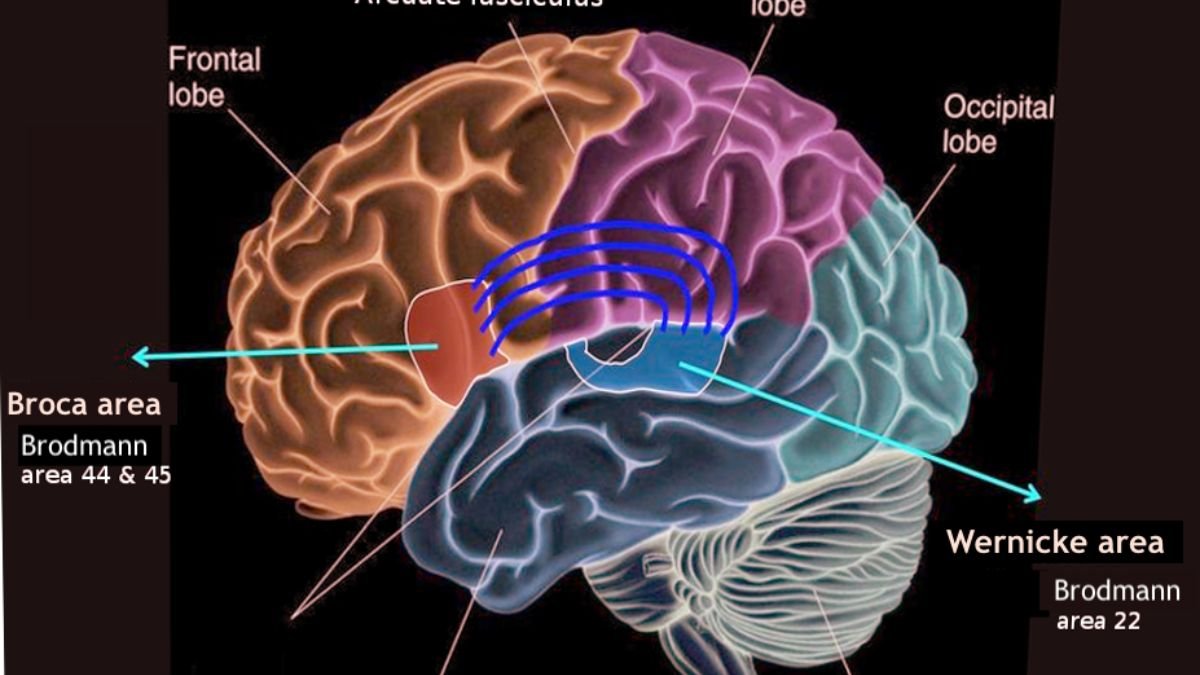
There are two main language-related areas in the left hemisphere of the brain:
- Broca’s Area (for language production)
- Wernicke’s Area (for language comprehension)
Damage to these two areas gives rise to the most common types of aphasia — Broca’s Aphasia and Wernicke’s Aphasia.
Broca’s Aphasia
It is also called “Non-Fluent Aphasia” because in this condition, the person can speak, but their language is broken and incomplete.
Main Symptoms: The person speaks short and simple sentences, such as “I… water… need.”
Speaking requires a lot of effort. The person can understand what others are saying, but has difficulty expressing themselves.
Writing ability is also affected.
Affected part of the brain: Broca’s aphasia occurs when there is damage to the left frontal lobe.
Wernicke’s Aphasia
This is called “Fluent Aphasia” because the person speaks normally, but their speech lacks meaning.
- Main Symptoms: The person speaks quickly and in long sentences, but they are incoherent.
- The meaning of the spoken words is unclear.
- The person is unaware that others cannot understand them.
- Difficulty understanding what others are saying.
Affected part of the brain: This condition occurs when the Wernicke’s area in the left temporal lobe is damaged.
Global Aphasia
This is the most severe form of aphasia. All of the person’s abilities to speak, understand, read, and write are affected.
- Main Symptoms: The person can speak very few words or not at all.
- Great difficulty understanding what others are saying.
- Communication becomes almost impossible.
- This is often seen in the early days after a stroke.
Affected part of the brain: This occurs when large areas of the brain — both Broca’s and Wernicke’s areas — are damaged.
Anomic Aphasia
In this type, the person has difficulty recalling words. It is considered the mildest form.
Main Symptoms: The person often pauses while speaking because they cannot recall the correct word.
Understanding ability remains normal.
Difficulty recalling words occurs in both speaking and writing.
Conduction Aphasia
In this condition, the person understands what others say and can speak, but has difficulty repeating words.
Main Symptoms: The person has difficulty accurately repeating what they hear.
Speaking and comprehension abilities are generally normal.
They try to correct incorrect words.
Main Causes of Aphasia
- Stroke: The most common cause. Disruption of blood flow damages the language areas of the brain.
- Traumatic Brain Injury (TBI): The brain is affected by an accident or injury.
- Brain Tumor: Pressure from the tumor can affect the language area.
- Neurological Diseases: Such as dementia or Alzheimer’s, which gradually reduce language abilities.
Diagnosis of Aphasia
Doctors or neurologists diagnose it through several tests, such as:
- MRI or CT Scan: Identifying the affected area of the brain.
- Language and Speech Tests: Checking the ability to recognize, understand, and repeat words.
- Cognitive Assessment: Measuring the person’s thinking and decision-making abilities.
Treatment and Rehabilitation
Treatment for aphasia is primarily based on speech and language therapy.
- Speech Therapy: The patient is helped to gradually redevelop their ability to speak, understand, read, and write.
- Group Therapy: Teaching communication skills to several patients together increases confidence.
- Technological Assistance: Nowadays, speech training has become more effective with the help of AI and apps.
- Role of the Family: The patient needs patience, support, and understanding. Family members can help by speaking slowly and in simple language.
Returning to Life After Aphasia
Although aphasia is a challenging condition, it is not the end of life. With the right treatment, therapy, and support, individuals can return to a normal life. Many people rediscover their ability to express themselves through music, painting, writing, or drama.
Conclusion
Aphasia teaches us that language is not just about words, but about the expression of emotions, thoughts, and relationships Each type of aphasia presents a different challenge whether it’s Broca’s aphasia where words get stuck, or Wernicke’s aphasia where meaning is lost But with every challenge comes a ray of hope Through the combination of science, medicine, and human compassion, people with aphasia are now finding new ways to speak and live again.
